Mikhail Shulga
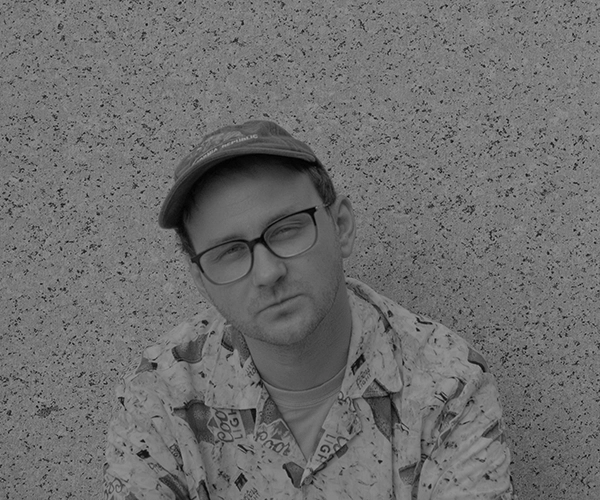
Mikhail Shulga

Internal Hyperspace. Liquid crystal display, Silicon dioxide sheets, Projection mapping, Sound, Sound Activation. 29x29x49 2024
Mikhail is an interdisciplinary artist born on Iturup Island in the Kuril Archipelago, Russia (Etuworop-sir / エツ゚ヲロㇷ゚シㇼ). Raised in Kaliningrad (formerly Königsberg), he holds a Master of Science in Environmental Engineering from Immanuel Kant Baltic Federal University and later trained in software development.
His art practice explores themes of digital-age existentialism, introspection, and the intersection of technology and human experience. Working with remnants of electronic waste and discarded technologies, he uncovers meaning and narrative through upcycling, inviting reflection on the fleeting and the forgotten in a rapidly evolving world.
Self-taught in music, Mikhail earned recognition in the All-Russian music competition How Space Sounds, organized by Alfa Future People with support from Mixmag. His compositions have been featured in the Music for Oceans charity compilation and the Miracle series by Belarusian independent label Ezhevika, with proceeds supporting ocean conservation via SeaLegacy. His work has also been presented on Radio Plato (BY).
Artist Statement
In my installations, I repurpose discarded electronics – objects imbued with nostalgia and unrealized promise. Once luxurious and cutting-edge, these items now lie abandoned on sidewalks. Many come from the ’90s and ’00s, my childhood years, when such technology symbolized hope for a better future. But that promise feels unfulfilled. While our lives have become more convenient, we are left grappling with existential questions: How does technology impact our sense of self and the meaning of human existence? Does the rapid advancement of technology amplify or diminish alienation, freedom, and authenticity? How do virtual spaces, social media, and digital communication shape our perceptions of reality, relationships, and identity? Perhaps the answers lie not in outside but in our own reflections. – We don’t know what to do with other worlds. We don’t need other worlds. We need a mirror. Tarkovsky, A. (Director). (1972). Solaris [Film].
My works are “activated” – always in motion, whether through video projections, sound, or moving physical elements. I use visuals that are often projected, altered, and distorted; these properties allow me to create immersive and haunting environments. This approach is largely inspired by early expanded cinema artists and pioneers of computer art; Stan VanDerBeek, Jordan Belson and Nam June Paik in particular.
Sound also plays a crucial role in my artistic practice. Self-taught as a musician, I compose indietronica with a touch of house music, that has equipped me with essential skills in sound design, mixing, and mastering. Using hardware synthesizers in the creative process taught me to appreciate the physicality of sound and its power to evoke emotion.
My goal is to explore electronic age existentialism through expanded cinema and digital installations, challenging the boundaries of each medium. By blending, stretching, altering, and distorting elements, I seek to uncover how introspection might emerge from the remnants of discarded electronics. These residues of technology, often overlooked, hold potential for reflection, inviting viewers to find meaning within the fragments of the digital era.
Gallery


