Examining the Feminine and Functional: Alumni Spotlight on Ceramicist Sam Briegel
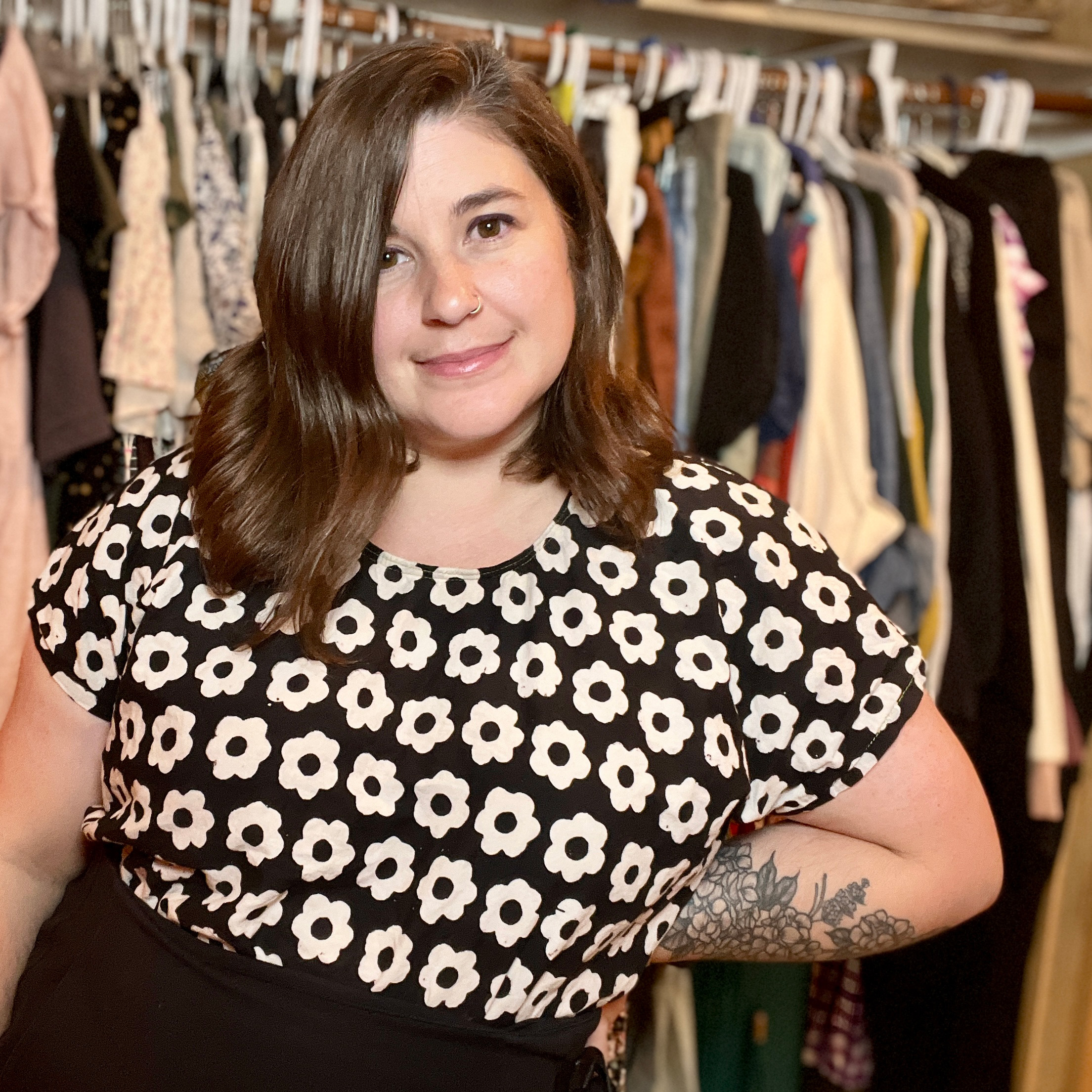
Since her graduation from the University of Tennessee’s BFA program in 2013, educator and ceramicist Sam Briegel’s functional, feminine work has been featured in major craft fairs, exhibitions and publications throughout the country, including the annual Smithsonian Craft Show in Washington, DC. A Knoxville native, her art draws from craft traditions in Appalachia and the wider South, utilizing elements of quilting and cross-stitch to bring texture and pattern to porcelain clay.
Sam, who also holds an MFA from Ohio University, has completed residencies and taught her distinctive techniques at many prominent art institutions; most recently, she was a visiting artist and workshop instructor at Alfred University, home to the top-ranked ceramics graduate program in the US.
We caught up with Sam, who currently works out of her studio on a four-acre farm near Baltimore and teaches ceramics part time at the Maryland College Institute of Art, to chat about her work and learn how her time at UT helped shape her current practice.
What’s your current studio practice like?
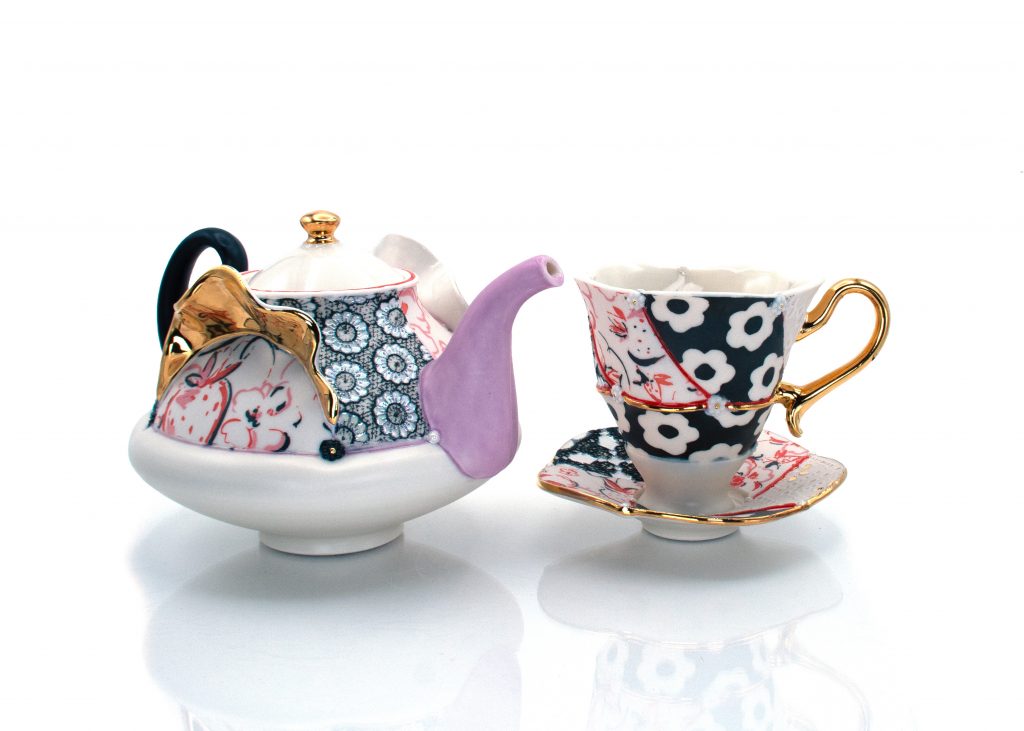
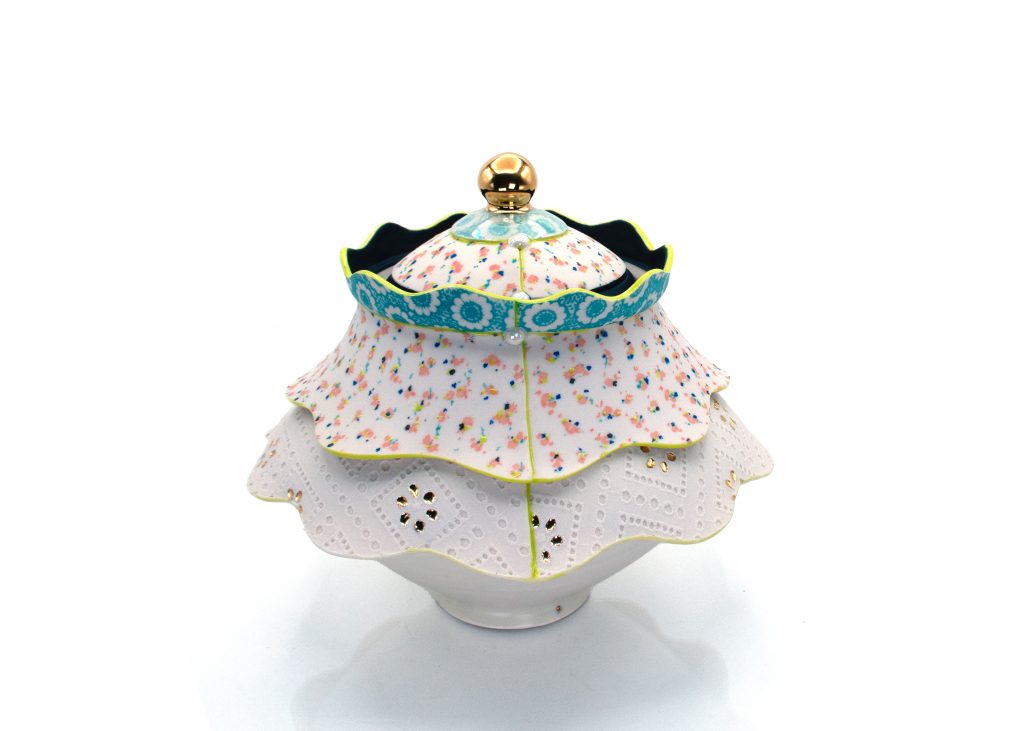
My work is very functionally driven. I use translucent porcelain clay, and I use techniques that view clay slabs as fabric and the vessel as body, turning flat patterns into three-dimensional forms. Historically, vessels and bodies have been compared. We even talk about vessels in that way; there’s a lip, a body, a foot, a shoulder. In my third year of graduate school at Ohio University, I developed the technique where I cast fabric textures as a monoprinted porcelain slab and combine slab building and wheel throwing techniques to create my work.
As an undergraduate student at UT, I was first drawn to ceramics because I viewed it as a medium that could hold all of the interests I loved, like sewing and printmaking.
What have you been up to recently?
The last year has been busy – every month I’ve had a new show or sale. In the last couple of months, I was a featured potter at the 2025 American Pottery Festival, which is a curated pottery show in Minneapolis, Minnesota that I have done for the last two years. This last couple of weeks, I participated in the Flower City Pottery Invitational in Rochester, New York, and I was a visiting artist at Alfred University. I demonstrated my work in front of the students during a three-hour workshop, and I felt that they really enjoyed it. It felt like a full circle moment in my career to share my work at an institution that a lot of my own professors from UTK and Ohio University had attended, and that is a model for current ceramic education.
How was your experience as a BFA student at UT?
Both Sally Brogden and Frank Martin had different things to offer, so my education was very well-rounded – Frank was very functionally focused, and Sally was more conceptually focused. They also had a lot of connections with other organizations and universities that they used to help students; there was an emphasis on going to National Council on Education for the Ceramic Arts, and going to my first NCECA when I was 21 was pretty fundamental. It helped me to decide that ceramics was the thing I wanted to do, because it felt like I found my community.
The professors at UT also really encouraged independent thinking in students. I remember once I fired my first gas kiln at 7am on a Saturday morning, and the pilot light to the gas kiln went out. I called Frank, and he said, “I’m at a Boy Scout retreat, but you already know what to do.” And he was right – I got it to work myself. As a student, I was trusted to do a lot of things, such as making my own clay and firing my own kilns. Those experiences helped me a lot as a professional today.
Do you have any advice for students who are interested in studying art, especially ceramics?
I think you have to find the right fit for how you want to spend your time and effort. I did pick a single medium to work with, which some artists don’t do. Clay is so complicated that it demands all of your time, so I think it makes it difficult to dabble in different areas. I knew that when I found clay that it could sustain a body of work and research forever. It’s such a fascinating medium that I never thought I would get tired of it, and I also never thought I would conquer it, and that has been proven to be true.
I also think that if you do something long enough, you will find success. It’s not just like you’ll magically be discovered one day, of course – I think it takes a lot of hard work and effort, and resilience. For example, my work has a very feminine, very Southern Belle aesthetic, and it doesn’t appeal to everyone. But resilience and taking risks is really important for an artist. So my advice to art students is: find what works for you; even if you think you can’t find an audience or a place for yourself, it exists. There’s a niche for everyone.
Learn more about Sam and see more of her work at https://www.samanthabriegel.com/.